Galdr — The spoken magick of Iceland


Galdr is borrowed by Old Norse and means Witchcraft, sorcery, magick, incantation, ritual work. In my previous post, we opened the door to the strange and fascinating world of the Galdrabók, the Icelandic grimoire that stands at the heart of this series.

Today, I would like to take a step back and look at one of the most important words in that world: galdr. What exactly is galdr?

The simplest translation is usually “magic” or “spell”, but that translation does not quite capture the atmosphere of the word. Galdr belongs to an older world in which words were not merely descriptions of reality.

Words could be used to influence reality. And that idea is essential if we want to understand Icelandic magick.


When words become magickal


The Icelandic magickal tradition contains many different techniques: runes, signs and staves, written formulas, invocations, objects, herbs and other materials. But alongside these physical expressions of magick was the power of the spoken word.

A galdr could be a magickal song, chant, incantation or formula. Perhaps maybe a rhyming poem that is formed into a Witch spell.

This is one reason the word galdr is so interesting. It points us toward a form of magick in which voice, rhythm, intention and words work together.

For a modern reader, it can be tempting to think of a spell as simply a set of mysterious words that are supposed to produce a particular result.

The historical material is more complicated than that. A magickal working could involve words together with signs, actions and particular objects. The spoken formula was one part of a larger magickal practice.

Stephen Flowers places considerable emphasis on this practical character of Icelandic magick in his work on the Galdrabók.

Rather than treating magick simply as mythology or folklore, he examines the surviving magickal books as evidence for how people actually understood and practiced magick.


The fascinating mixture

inside the Galdrabók


One of the things that makes the Galdrabók so compelling is that it does not present us with a neat, untouched example of “pagan Viking magick.”

It is a much more complicated document. The manuscript was compiled in the late sixteenth and seventeenth centuries, and its material reflects a world in which older Germanic traditions existed alongside Christianity and other influences.

The surviving spells include Icelandic magickal signs and runic material, references to Norse gods, Christian prayers and names, and other elements that do not fit comfortably into a single religious category.

It reminds us that magickal traditions do not always disappear when religions change. Sometimes they adapt. They borrow. They conceal themselves. They acquire new names and new explanations while older ideas continue underneath.

I find this one of the most fascinating aspects of Icelandic magick. It is not simply a window into a distant pagan past. It is also a record of survival and transformation.


Magick for ordinary problems


There is another feature of the Galdrabók that deserves attention. The spells are not all concerned with grand supernatural mysteries. Some are remarkably practical.

The manuscript contains workings connected with protection, illness, childbirth, sleep, trouble at sea and other everyday difficulties. There are also spells with much darker or more aggressive purposes.

This gives us a glimpse into a very human relationship with magick. Imagine living in Iceland centuries ago. The landscape is harsh. The sea can be dangerous. Medical knowledge is limited. Travel is difficult. A person’s security can depend upon weather, luck, reputation, neighbours and forces that seem far beyond individual control.

In such a world, the desire for protection, healing, knowledge and influence is hardly mysterious. Magick becomes practical. It becomes something a person might turn to when ordinary means were not enough.


The magickal sign

and the magickal word


As we continue through this series, we will encounter another famous feature of Icelandic magick: the galdrastafir, the magickal staves or signs.

To modern eyes, these symbols can look almost like a secret alphabet. But it is worth resisting the temptation to treat every Icelandic magickal stave as an ancient Viking symbol.

Many of the surviving magickal manuscripts belong to the early modern period, long after Iceland’s conversion to Christianity. The history of these symbols is therefore more complicated than many modern presentations suggest.

The Galdrabók itself contains a fascinating combination of written formulas and magickal signs. This gives us an important clue about the nature of the tradition.

The word and the sign belong together. One is spoken. The other is seen. One moves through sound. The other is fixed into a physical form. Both attempt to give intention a form that can act upon the world.


A tradition worth

approaching carefully


There is something else I would like us to keep in mind as we explore Icelandic magick. The modern popularity of runes, Norse mythology and Icelandic magickal staves has produced many beautiful interpretations, but modern spirituality and historical Icelandic practice are not necessarily the same thing.

The surviving sources are fascinating precisely because they are messy. They contain Christian and pre-Christian elements. They contain practical remedies alongside curses. They preserve older ideas while also showing the influence of later centuries.

That complexity does not make them less magickal. For me, it makes them far more interesting.

The Galdrabók is not a perfectly preserved relic from the Viking Age. It is a surviving piece of a living tradition that changed over time. Flowers describes the surviving Icelandic magickal manuscripts as evidence of a tradition that continued to develop for centuries, eventually reaching into the modern period.

And perhaps that is the best way to approach them: not as a museum piece, but as a record of people trying to understand and influence an uncertain world.


My blog

Here is my blog.
 

The Galdrabók — A Witch’s Journey into Icelandic Magick


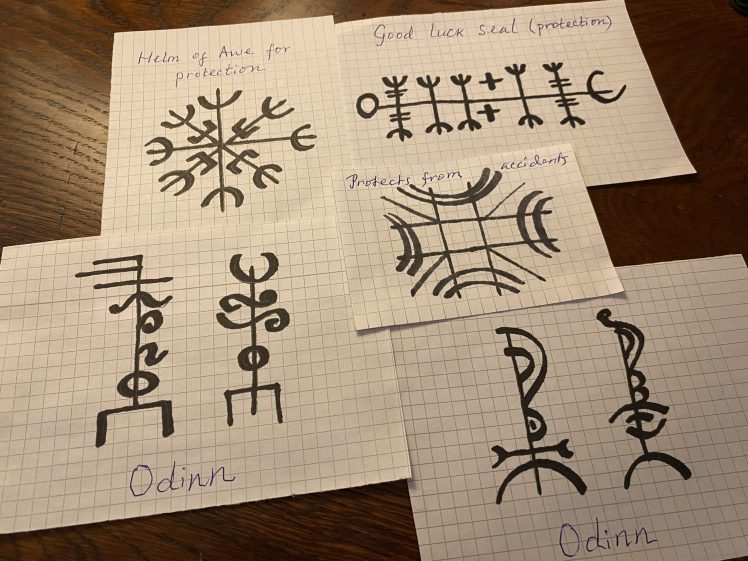
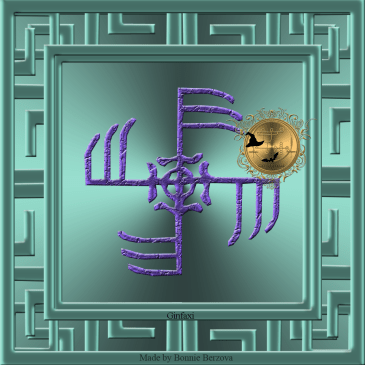
These are Icelandic sigils for magick.


The Galdrabók is a very interesting book about Icelandic magick. There are books that tell us about magick. And then there are books that make us feel as though we have opened a door.

The Galdrabók, usually translated as The Book of Magic, is one of the most fascinating surviving Icelandic magickal manuscripts. Written in Iceland around the late sixteenth or early seventeenth century, it contains a remarkable collection of magickal instructions, prayers, invocations, charms and magickal staves.

For the modern Witch, opening the Galdrabók can feel like looking across several centuries and discovering that someone, somewhere in Iceland, was asking many of the same questions we still ask today:

How can I protect myself?
How can I overcome an enemy?
How can I find love?
How can I gain success?
How can I influence circumstances that seem beyond my control?
How can I communicate with the unseen?

But there is something important to remember before we begin.

The Galdrabók is not an ancient Viking spell-book. It comes from Christian-era Iceland, several centuries after the Viking Age.

Its magick reflects a fascinating mixture of traditions: Icelandic folk magick, Christian prayers, learned European magickal traditions, magickal alphabets, charms and practices that belong to the world of galdr.

That mixture is precisely what makes the manuscript so extraordinary.


What does “galdr” mean?


The Old Norse word galdr is associated with magickal song, chanting and incantation. Magick was not necessarily something that was silently written on a piece of parchment.

The voice could be magickal. Words could be spoken. Names could be invoked. Sounds could be repeated. A magickal formula could be sung or chanted.

This is one of the reasons I find Icelandic magic so fascinating for modern shamanic witches. There is a natural connection between voice, rhythm, breath, intention and altered states of consciousness.

A witch sitting beside a fire, chanting a magickal formula while a drum beats steadily in the background, is creating a very different experience from simply reading words from a page.

The body becomes part of the spell.


The mysterious staves


Perhaps the most famous feature of Icelandic magical manuscripts is their strange and beautiful drawings. These are the magickal staves.

Some look almost like runes. Others look like intricate wheels, crosses, branches or geometric constructions.

Some are associated with particular magickal purposes. Others are accompanied by words, names or instructions explaining how they should be used.

And this is where we should be careful. It is tempting to call every Icelandic magical stave a “sigil of a spirit.” But historically, that is not quite accurate.

Some magickal signs are associated with particular beings, names or powers, while others are functional magickal signs created for a particular purpose.

A stave might therefore be understood as part of a magickal language:

the symbol gives form to the intention,
the words give it direction,
and the ritual gives it action.

For the modern Witch, this opens fascinating possibilities. A stave can be studied historically. It can be drawn as part of meditation.

It can be incorporated into a modern talisman. It can become part of a knot spell. Or it can inspire the creation of a completely new magickal symbol.

But we should always distinguish between what the historical manuscript tells us and what we choose to do with its imagery today.


What kind of magick

is found in the Galdrabók?


The manuscript contains a surprisingly broad magical repertoire. There are spells concerned with:

protection

healing

love

victory

success

concealment

finding lost things

causing fear

dealing with enemies

and many other aspects of everyday life.

This tells us something important. Magick was not necessarily regarded as a separate activity reserved for extraordinary occasions. It could be concerned with the ordinary problems of being human:

Love, money, health, danger, travel, enemies, luck, uncertainty and fear.

The magickal practitioner wanted tools for navigating the unpredictable world. And perhaps that is why the Galdrabók still speaks to us.


The Christian elements


One of the most fascinating things about the manuscript is that its magic is not purely “pagan.”

Christian prayers and references to God, Christ, angels and biblical figures appear alongside magical signs and older magickal traditions.

For a modern reader, this can initially seem strange. We may imagine that Norse paganism and Christianity were completely separate worlds.

Historical Iceland was much more complicated. The manuscript belongs to a period when Christian religious culture had existed in Iceland for centuries, while older traditions, folklore and magickal practices continued to influence popular culture.

The result is a magical world in which Christian prayer, folk magick, magickal signs and older Norse concepts can exist on the same page. That mixture is part of the historical reality.


The Galdrabók

and the modern Witch


So how should we approach the Galdrabók today? Not as a cookbook. And not as a collection of spells that we must reproduce word for word.

I prefer to approach it as a window into the magickal imagination of Iceland. We can study the old formulas. We can examine the staves. We can learn about the plants and materials.

We can explore the relationship between spoken words and magical intention.

And then we can ask: what can this teach the modern Witch? Perhaps the greatest lesson is that magic is not simply about possessing the correct symbol.

It is about relationship. Relationship with words. Relationship with symbols. Relationship with the natural world. Relationship with the unseen. And relationship with one’s own intention.


The beginning of our journey


In the coming posts, I want to explore this world more deeply. We will look at the mysterious Icelandic magickal staves and ask what they actually mean.

We will explore some of the most fascinating examples found in Icelandic magical tradition. We will talk about galdr—the magick of the voice. We will explore the fascinating practice of knot magick.


My blog

Here is my blog.


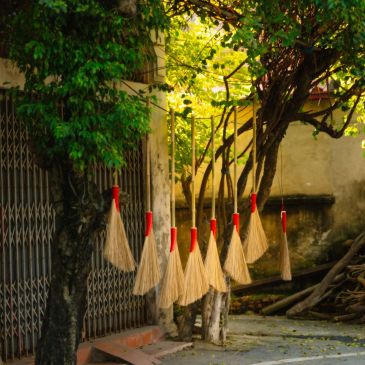
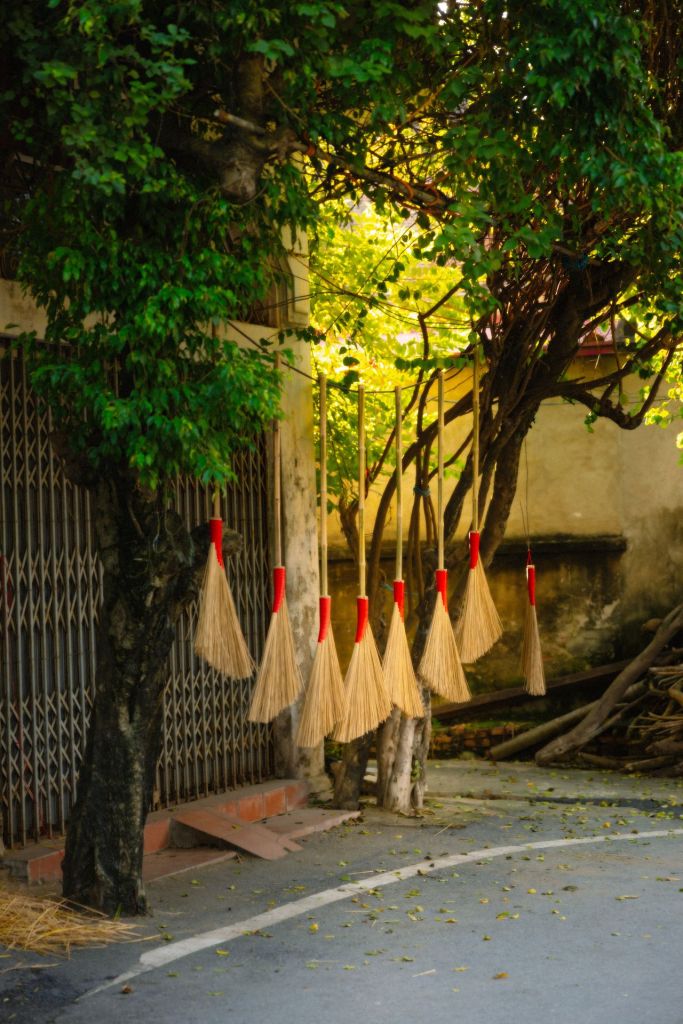
The Witch’s Broom — A tool of cleansing, protection and magick


The Witch’s Broom is most probably the favourite tool of many Witches. Few objects are more immediately associated with the Witch than the broomstick.

The black-clad Witch, the pointed hat, the cauldron and the broom have become almost universal symbols of witchcraft.

The broom has a fascinating history, but it is worth separating documented folklore and historical witchcraft accusations from modern witchcraft practice.

The familiar image of the witch flying on a broom is largely an early-modern European development rather than an ancient pagan custom.

Broomsticks appear in fifteenth-century imagery of witches, and later accounts connected them with magical flight.

For the actual broom, the traditional besom was a bundle of twigs or plant material attached to a wooden handle. Brooms could be made from locally available vegetation; surviving magical examples include wood, willow bindings, reed, palm leaves, thread and foraged branches.

But the history of the broom is much older and more interesting than the familiar image suggests. The broom began as something wonderfully ordinary:

a household tool.

It swept the floor. It cleared away dirt. It created order from disorder. And perhaps that is precisely why it became such a powerful magickal symbol.


The Besom


The traditional broom used in Britain and other parts of Europe is often called a besom. A besom consists essentially of a bundle of twigs or other plant material attached to a handle.

The materials varied according to what grew locally. Birch twigs, broom, heather, willow and other flexible branches could be used for the brush, while a straight wooden branch formed the handle.

The Museum of Witchcraft and Magic has surviving examples of magickal and witchcraft-associated brooms made from wood, willow, reed, palm leaves, thread and foraged branches.

So there is no single “correct” witch’s broom. A broom made from materials gathered from your own landscape can be especially meaningful.

The forest provides the wood. The plants provide the brush. The Witch brings the intention.


How did the broom

become connected with witches?


This is where history becomes particularly fascinating. The image of witches flying on broomsticks becomes visible in European sources during the late medieval and early modern period.

One famous early example is the fifteenth-century manuscript Le Champion des Dames, whose illustrations show witches flying on broomsticks. The imagery developed in the context of European witch beliefs and witch trials.

Later European demonological literature and artwork increasingly portrayed witches flying through the air on staffs, brooms and other objects.

Some accounts also associated magical flight with so-called flying ointments. Historical sources describe alleged witches applying intoxicating or poisonous preparations before supposed supernatural journeys, although the reliability and extent of these practices are debated.

So the broomstick did not begin as an ancient pagan flying machine.

Its association with the Witch developed through a complicated mixture of folk magick, household symbolism, magickal beliefs, witch-trial testimony and early-modern artistic imagination.


Why is the broom so magickal?


For the modern Witch, the symbolism is almost perfect. A broom removes what no longer belongs. Dust is swept away. Old things are cleared.

The threshold is purified. The house becomes orderly again. Therefore the broom can become a magickal instrument of: cleansing, protection, banishing, purification and renewal.

When you sweep with a magickal broom, don’t think only about cleaning the floor. Imagine sweeping away:

fear,

stagnant energy,

arguments,

unwanted influences,

old habits,

and everything that has finished its purpose.

The broom becomes a physical representation of magickal intention.


Choosing a new Witch’s broom


When making or purchasing a new broom, choose one that feels right in your hands. It does not need to be expensive. In fact, a simple handmade besom can be much more meaningful than an elaborate decorative broom.

Look for a wooden handle that feels comfortable and balanced. For the brush, choose natural materials where possible. You might use:

birch — cleansing and renewal

willow — water, intuition and flexibility

heather — protection and the wild landscape

broom plant — naturally associated with sweeping and the old besom tradition

rowan — protection

These plant associations are part of modern magickal symbolism rather than a universal historical code. Let the plants have meaning within your own tradition.

And if you gather your own wood, do so responsibly. Never take a living branch unnecessarily. A fallen branch can carry just as much beauty.


Consecrating the new broom

beneath the Full Moon


A Full Moon is a beautiful time for consecrating a new magickal tool. There is no single historical “Full Moon broom consecration” that can be reconstructed from medieval European sources, so the following is a modern witchcraft ritual.

Place the new broom on a clean cloth. Light a candle. Place a bowl of water beside it. You can also place salt, incense or a small offering of herbs nearby.

Then sit quietly with the broom. Hold the handle with both hands. Feel its weight. Think about all the things this broom will help you remove from your life.

When the Moon is visible, raise the broom toward the moonlight. Then say:

Under the light of the Full Moon,
I awaken this broom.
May it become my tool of cleansing.
May it sweep away what harms me.
May it clear what no longer belongs.
May it guard the threshold of my home.
May it carry away fear, disorder and stagnation.
And may it leave behind peace, strength and light.

Pass the broom gently through the incense smoke if you are using incense. Then touch the handle with a little clean water.

You can sprinkle a tiny amount of salt around it, rather than directly onto the wood, if you want to include the symbolism of earth and purification.

Finally, hold the broom beneath the moonlight again and say:

Moon above, earth below,
awaken this tool and let its power grow.
By hand, by heart, by word and will,
let this broom serve my magic still.
What I sweep away shall depart.
What I protect shall remain within my heart.

Then leave the broom where it can receive the moonlight overnight.


The first sweeping


The first time you use your newly consecrated broom, don’t begin by sweeping ordinary dirt. Begin at the back of the house. Move slowly toward the front door.

As you sweep, imagine everything unwanted being gathered together and pushed toward the threshold. You can speak:

What does not belong here, depart.
What brings harm, depart.
What brings fear, depart.
What brings disorder, depart.
This home is cleansed.
This home is protected.
This home is mine.

Sweep everything symbolically toward the door. Then stop. Do not sweep the unwanted energy back into the house. Open the door and imagine it leaving.

Close the door. Now your broom has performed its first magickal task.


The broom as guardian


I also like to think of the broom as a guardian of the threshold. When it is not being used, it can be kept near the entrance of the house. The physical broom reminds the Witch:

I decide what enters.
I decide what leaves.

This makes the broom especially powerful for boundary magick. You can even tie a small cord around the handle and add a protective symbol, rune or sigil meaningful to your own practice.


And what about flying?


The broomstick’s famous ability to fly belongs primarily to the folklore and magickal imagination that developed around European witchcraft.

For the modern Witch, I prefer to understand “flying” symbolically. The broom is the vehicle of the Witch’s imagination. When you sit with it during trance or drumming, imagine travelling across the night sky.

Above the forest. Above the mountains.

The broom becomes a bridge between the ordinary world and the imaginal world. You don’t need to claim that your physical body has left the ground.

The journey can happen in consciousness during your meditation.


My blog

Here is my blog.


Njörðr — Lord of the sea, prosperity and the wealth that comes by water


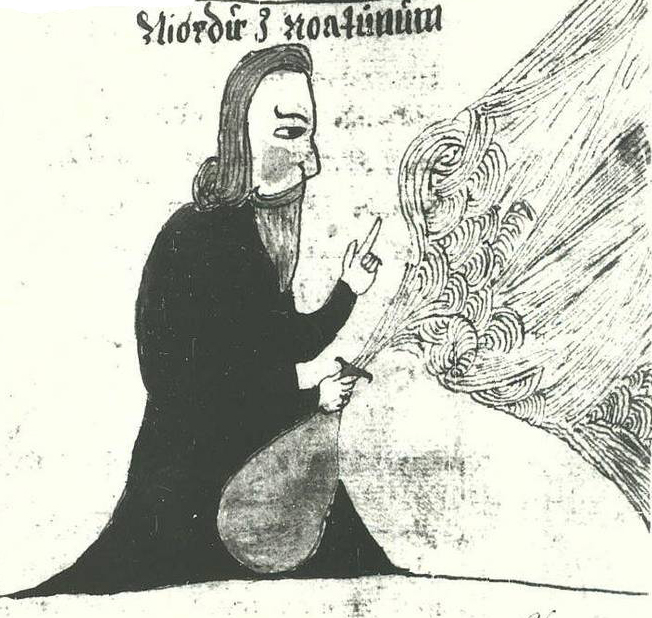
This is the Icelandic god Njordr. Source: Wikipedia.


Njörðr is the Icelandic god of successful trade and prosperity. The strongest historical foundation for this post is actually quite good: Gylfaginning explicitly says that Njörðr was invoked by seafarers and fishermen, and describes him as wealthy enough to grant land and possessions.

Ynglinga saga connects his rule with peace, good seasons, and prosperity, and says that sacrifices continued under him.

What we cannot establish from the surviving sources is a detailed fishing spell, a particular food that was specifically “Njörðr’s favourite,” or a historical ritual in which Odin and Njörðr were summoned together for commercial prosperity.

I’ve therefore written those parts as as modern reconstruction inspired by the sources, rather than presenting them as documented Viking ritual.

Among the gods of the North, Njörðr has always fascinated me because his power is wonderfully practical. He is not only a god of the sea.

He is a god of favourable winds, successful voyages, fishing, wealth, abundance and prosperity. Maybe it is possible to store winds in knots of a cord by invoking Njordr.

In Gylfaginning, Njörðr is described as ruling the winds, calming the sea and fire, and being invoked by seafarers and fishermen. He is also described as extraordinarily wealthy and capable of granting people land and possessions.

This is one of the clearest pieces of evidence we have for approaching Njörðr in magickal work. The old sources are telling us directly:

If you travel upon the sea, call on Njörðr.
If you fish, call on Njörðr.
If you seek prosperity and abundance, call on Njörðr.


Njörðr and the bounty of the sea


For a Viking fisherman, the sea was not an abstract symbol. It was livelihood. A successful voyage could mean food for the family, goods to trade and wealth for the community.

A poor catch could mean hardship. A dangerous sea could mean death. So the idea of a divine power who could calm the waters, influence the winds and bring prosperity would have been enormously important.

We should be careful, however, about saying that Vikings used a particular surviving “Njörðr fishing spell.” No such detailed spell survives.

What we do have is the testimony of the Prose Edda that fishermen and seafarers called upon Njörðr, combined with Ynglinga saga, where Njörðr’s reign is associated with peace, good seasons and prosperity.

That gives the modern witch a very strong foundation.


Njörðr of Nóatún


Njörðr dwells at Nóatún, the “enclosure of ships” or “ship-place,” and his identity is deeply connected with the coast and the sea.

He is a Vanir god, associated with fertility, prosperity and the forces that make life materially abundant. His relationship with Skaði is also revealing.

She longs for the mountains and the hunting grounds. Njörðr longs for the sea.

The Prose Edda describes how the two tried to divide their time between the mountains and Nóatún, but neither was truly comfortable in the other’s landscape. Njörðr misses the sound of the sea and seabirds when he is in the mountains.

This makes Njörðr feel profoundly coastal. He belongs beside the harbour. Beside the fishing boat. Beside the nets. Beside the merchant ship waiting for a favourable wind.


Calling Njörðr with Óðinn


I like the idea of approaching Njörðr together with Óðinn, but I would describe this as a modern magickal working, not as a documented historical ritual.

The two make an interesting pair. Njörðr brings favourable conditions, abundance and prosperity. Óðinn brings wisdom, knowledge, strategy and the ability to recognize opportunity.

One might ask Njörðr for the favourable wind. One might ask Óðinn to know when to sail. One might ask Njörðr for a prosperous journey.

One might ask Óðinn for the wisdom to make good decisions along the way.

The ritual can begin with the sound of a drum. Let the rhythm become the movement of waves. Slowly imagine the shoreline. Hear the water. Imagine a harbour filled with ships.

Then call:

Njörðr of Nóatún,
Lord of wind and sea,
Friend of the fisherman and voyager,
I call to you with respect.
Calm the waters before me.
Bring favourable winds to my journey.
Let the sea yield its bounty,
and let honest work bear abundant fruit.

Then call Óðinn:

Óðinn, Wanderer and seeker of wisdom,
stand beside me.
Give me the sight to recognize opportunity,
the wisdom to choose wisely,
and the courage to act when the favourable wind arrives.


What can be offered to Njörðr?


The surviving sources do not give us a specific menu of “Njörðr’s favourite foods.” So I would not claim that a particular modern offering is historically certain.

Instead, I would choose food that reflects his character. For a modern ritual, suitable offerings might include:

fresh bread, grains, fish, apples, berries, honey, butter, salt, water, or a drink such as ale, beer or mead.

Fish is particularly symbolically appropriate because the Prose Edda explicitly associates Njörðr with fishermen. A meal can also become part of the offering.

Place a portion aside for Njörðr before eating.

You might say:

Njörðr, Lord of Nóatún,
I give this food in gratitude.
May there be food upon my table,
work for my hands,
favourable winds upon my journey,
and prosperity gained honourably.


The Njörðr prosperity magick


For modern witches, I think Njörðr is particularly appropriate for prosperity that comes through movement and exchange. Not simply “give me money.”

Instead:

bring me opportunities.

Bring me customers.

Bring me good contracts.

Bring me successful journeys.

Bring me profitable exchanges.

Bring me the right people at the right time.

This fits the maritime and trading symbolism beautifully. A witch who runs a business might place a small bowl of water on the altar together with a coin, a piece of bread and a small representation of a ship.

The water represents the sea. The coin represents wealth. The bread represents abundance. The ship represents movement and trade

Meditate on the portrait of Njordr during your ritual. Look at the portrait of Njordr during 20 minutes and speak about your difficulties to increase your income.

Then speak:

As ships cross the waters,
may opportunity cross my path.
As the tide returns,
may prosperity return to me.
As the harbour receives ships,
may my work receive customers and good fortune.
Let honest exchange bring abundance.
Let what I give return multiplied in blessing.


Fishing magick

There are special sigils for fishermen in the “Galdrabok” and in “Icelandic magic” by Stephen Flowers.

For someone who actually fishes, the symbolism becomes even more direct. Summon Odinn and Njordr first. Then before going to the water, the witch could hold the sigil and a fishing line, hook or net and speak:

Njörðr, master of favourable waters,
guide my journey.
Let the wind be kind,
let the waters be generous,
let me take only what I need,
and let me return safely home.

The sigil must be charged inside the ritual circle by directing the raised magickal energy into the sigil, the fishing line, hook or net. The sigil should be placed inside the boat or inside the pocket.


Knot magic for prosperity


Njörðr is also wonderfully suited for knot magick. Take a cord in a colour that represents prosperity to you. Place a small symbol of the sea or a the portrait of Njörðr and the fishing sigil beside it.

Then tie seven knots. With each knot, name something that contributes to prosperity:

First knot — opportunity.
Second knot — good fortune.
Third knot — wise decisions.
Fourth knot — successful exchange.
Fifth knot — steady income.
Sixth knot — abundance shared wisely.
Seventh knot — prosperity sustained.

At the final knot:

As the tide returns to the shore,
may prosperity return to me.
As the wind fills the sail,
may opportunity fill my life.
Njörðr, Lord of abundance,
guide the winds of my fortune.
Óðinn, Lord of wisdom,
teach me where to steer.
May my work prosper,
may my household flourish,
and may my abundance be used well.

Thank Njordr and Odinn for their help, say good bye to the gods, and close the ritual circle.


My blog

Here is my blog.


Fenrir and Hel — The Wolves at the Threshold


Fenrir and Hel are the children of Loki and the giantess Angrboða. Fenrir is the great wolf. Hel is his sister, the powerful ruler of the realm of the dead.

The Prose Edda tells us that Loki and Angrboða had three children: Fenrir, Jörmungandr and Hel. The gods became fearful of the prophecy surrounding them and separated the three.

Jörmungandr was cast into the sea, Hel was sent to Niflheim and given authority over the dead, while Fenrir was kept among the gods and eventually bound.

These are not stories about harmless companion animals. They are stories about enormous primordial powers. And that is precisely why I find working with them so fascinating.

And these wolves are huge! I don’t want to scare you away, but Fennrir is 2 meters high and approximately 10 meters long. When I sit on the sofa and Fennrir climbs over the sofa, my head does not even reach his belly.


Where do Fenrir and Hel live?


It is important not to confuse the Norse mythological geography with modern geography. Fenrir does not historically have a home in Sweden, Norway, Finland, Germany or Russia.

Hel does not historically live in a particular cave somewhere in Scandinavia. These are mythic landscapes.

Fenrir belongs to the world of the gods and giants and is eventually bound until Ragnarök. Hel is given dominion over the dead and a dwelling in the realm associated with Niflheim.

So when a modern shamanic witch feels the presence of Fenrir or Hel in a forest, beside a lake, in a house, or during a drumming journey, I would understand this as an encounter within the witch’s spiritual or visionary practice, rather than claiming that Fenrir has physically relocated to Finland or Hel has taken up residence in Germany.

For me, that distinction does not make the experience less magickal. It makes it more honest.


Fenrir as the guardian wolf


Fenrir is usually approached through his terrifying aspect. He is enormous. He cannot be controlled by ordinary chains.

The gods eventually bind him with Gleipnir, the magickal binding fashioned by the dwarfs. In the myths, Fenrir’s destiny is tied to Ragnarök and his confrontation with Óðinn.

But a witch working with Fenrir can choose to approach another symbolic dimension: the wolf that cannot be broken.

Fenrir can therefore become a powerful figure for work involving:

  • courage;
  • independence;
  • protection of boundaries;
  • resistance to oppression;
  • instinct;
  • fierce loyalty;
  • awareness of danger;
  • freedom from unhealthy restraints.

I would not tell a witch, “Fenrir will protect your house because the Norse believed he was a house guardian.” They did not. Instead, I would say:

If you develop a personal relationship with Fenrir, you may choose to invite his wolf-image into your protective practice. That is a modern devotional and magickal relationship.

You need to go on shamanic trips by visualizing yourself in the company of wolves in the forest. I have done this so many times and I used to end up in Siberia together with many wolves.

I used to gently scratch one of the wolves on his throat and his stomach. After this I and the wolf became very close friends. Fenrir is at my home right now and he says that I met him in Siberia.

I believe that an astral representation of Fenrir can be found in almost every big forest. Fenrir is the leader of all the forest wolves.


Hel as the Guardian

of the Threshold


Hel is different. She is not simply “the goddess of death” in the simplistic modern sense. In Gylfaginning, she is given authority over the dead who come to her, particularly those who die from sickness or old age. Her hall has high walls and great gates.

That imagery makes her fascinating for a witch working with boundaries and thresholds. Hel can be approached as the keeper of a boundary that every living person will eventually encounter.

In a contemporary magickal practice, a witch might therefore ask Hel to teach:

discernment, boundaries, acceptance, protection at thresholds, ancestral awareness, and the wisdom of endings.

She does not need to be imagined as an evil creature.

Nor does she need to be made into a sweet, harmless spirit.

Her power lies precisely in her otherness.

If you want to meet Fenrir and Hel, I think that it makes sense to talk about this desire with Loki, because he is their father. Or you might talk about this with Jormungandr and Odinn.

The gods have special astral devices and they can even call Fenrir and Hel to visit you during your ritual.


Can Fenrir and Hel

take human form?


The surviving Norse sources do not describe Fenrir or Hel routinely changing into human forms. If a modern witch encounters them in human form during meditation, trance, dreaming or shamanic journeying, I would describe that as a form chosen by the practitioner’s visionary experience, not as something documented in the Eddas.

I asked Fenrir: “Can you turn into a human?” He said: “Of course I can turn into a human”. Moreover, Fenrir practices magick and this wolf can teach you magick.

Personally, I think this can be a beautiful way of approaching a powerful being. A witch might say:

Fenrir, great Wolf,
if you choose to come near me,
come in a form my human mind can understand.
Do not diminish your nature,
but make your presence known to me
in a form I can meet without fear.


And to Hel:

Hel, Lady of the Threshold,
if you choose to appear before me,
come in a form I can recognize.
Let me see you clearly
without terror clouding my understanding.
Teach me to stand calmly before the unknown.


What would they eat?


Again, there is no surviving Norse ritual instruction saying, “Leave this food for Fenrir” or “Hel prefers this particular meal.”

So I would not invent a Viking-age menu and present it as historical fact. Instead, the witch can choose offerings according to symbolism.

For Fenrir, I might choose:

meat, dark bread, water, or a simple food associated with strength and the wild.

For Hel, I might choose:

bread, meat, grain, herbs, water, or another simple food associated with nourishment and the boundary between life and death.

The important thing is that these are modern devotional choices, not historically documented offerings to Fenrir and Hel.

And I would never leave meat outside where it could attract wildlife or create a nuisance. An offering can be placed symbolically and disposed of respectfully afterward the ritual.


Can they become guardians

of the Witch’s home?


This is where I personally find the symbolism of the wolf particularly powerful. Imagine the threshold of the house.

Imagine Fenrir standing there—not as a literal animal occupying the physical property, but as a guardian-image within the witch’s magickal world.

Ask Odinn or Loki to call Fenrir and Hel towards your ritual circle. The wolf watches. The wolf listens. The wolf notices what approaches.

The witch can create a relationship with the wolves of Loki through ritual offerings, drumming and protective magick.

A simple request might be:

Fenrir, Wolf of the wild power,
stand at the boundary of this home.
Let nothing harmful cross this threshold.
Let me recognize danger before it reaches me.
Guard what is mine to protect,
and let this house remain a place of peace.


Learning the intuition of the wolf


My shamanic drum is made of reindeer skin. I and the reindeer often talk about various subjects. The reindeer possessed me, because I had been already possessed by the spirits of the dead, and I was shocked: 15 minutes before a dangerous situation the reindeer ran away to the forest.

The spirit of the reindeer informed me that now it has to quickly leave, because a large bear will come towards my ritual circle. The reindeer could see into the future.

I would be especially careful with the idea of allowing Fenrir to “possess” the witch, because possession can result in hallucinations and other not so good effects that will need some astral surgeries.

I would not recommend attempting literal possession or surrendering control of the body. There is a much safer and, in my opinion, more interesting alternative: wolf embodiment.

During drumming or trance work, the witch can invite the qualities of the wolf into her awareness. Sit or stand. Breathe slowly. Listen.

Imagine the ears of the wolf. Notice every sound. Imagine the nose of the wolf. What information is carried by the air? Imagine the eyes of the wolf.

Perhaps shamanic journeying or meditations can help you to develop the intuition of a wolf. You might find out that you are now a wolf and run on four legs.

Try to change your shape back to the human shape. In my meditations I can change into a wolf, a tiger, a shark, an owl and an eagle.

At one point and during my meditation, I was the owl in Siberia and I met a male owl there. We became parents to four small owls. I can fly in my meditations on the astral plane.

You could also train yourself to shapeshift into various animals, and you could be together with the animals in the forest. The animals will talk to you about their lives in the forest.


My blog

Here is my blog.


Calling the World Serpent: a meeting with Jörmungandr in extreme cases


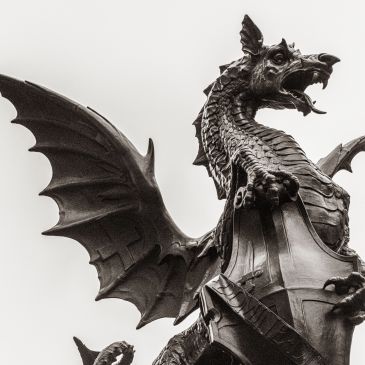
This is how Jormungandr could look in some cases.


Calling the World Serpent Jormungandr is an operation for extreme cases when we need to save someone from danger. There is something profoundly different about approaching Jörmungandr.

You call Jormungandr at your own risk, because this spirit is huge and he is a snake that can fly in the air. But this spirit can protect us from the most vicious enemies.

He is not simply a monster from an old myth. He is the Miðgarðsormr—the Serpent of Midgard, the immense being who lies in the world-sea and encircles the human world, holding his own tail in his mouth.

In the Prose Edda, Odin casts him into the sea, where he grows until he surrounds Midgard. Historically, we have no evidence that Jörmungandr was worshipped or summoned as a deity.

What follows is therefore my own contemporary magickal practice, inspired by the old mythology rather than a reconstruction of an ancient Norse rite.

And yet, for the Witch, mythology can become a living language.


The drum and the descent


I like to begin with the drum. The steady rhythm becomes the movement of the sea. Jormungandr told me that he loves the sound of the shamanic drum when we want to summon this spirit.

Do not drum as though you are trying to force something to appear. Instead, let the rhythm carry your awareness downward—beneath the ordinary world, beneath the surface of the water, toward the enormous silence where the World Serpent rests.

Look at the sigil of Jormungandr during 5 minutes and drum loudly to summon this spirit. The question here is: “What if you cannot handle the snake?”

I summoned Jormungandr and I was thrilled by his sharp intellect. His IQ is most probably non human and equal to a high number. The spirit speaks about ancient times, myths, different types of magick that he does and many other interesting subjects.

If you are unsure, if you feel that perhaps it is dangerous for you to summon Jormungandr, then don’t summon this spirit. I will not be held responsible if you cannot handle the serpent, because he is enormous in size.

Jormungandr did not bite me or eat me. He flew me from Sweden to Iceland and precisely to his lake. He lives in the lake.


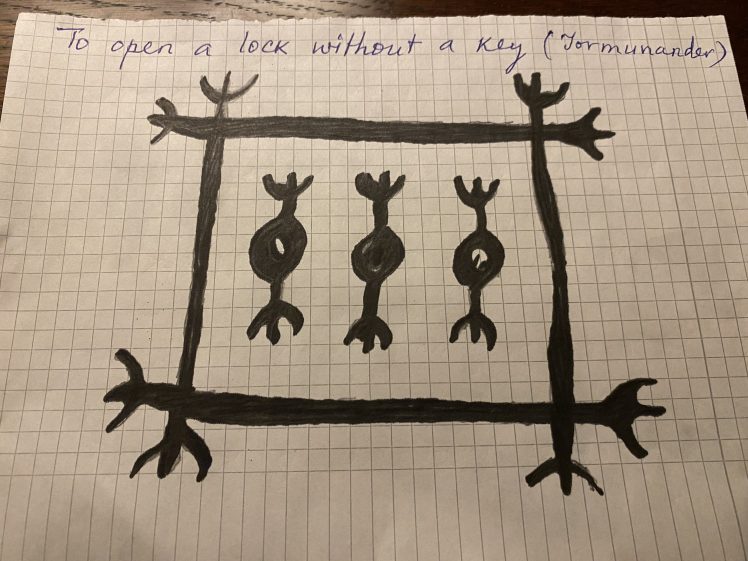
This is the sigil of Jormungandr.


As the rhythm deepens, call him by his name and tell him why you are calling him:

“Jörmungandr please come to me, because I am in a difficult situation and I need your protection.”

“Jörmungandr, Serpent of Midgard,
great one who encircles the world,
I call to you with respect.
If you are willing, come into my presence.
Let me meet you without hostility,
and let there be peace between us.”

Then listen. The most important part of this kind of work is not the calling. It is the listening afterward. The serpent will say:

” I have come. Do you see me?”

Perhaps you can only hear Jormungandr. Tell him politely: “Please take on a human shape so that I don’t get scared if I suddenly begin to see you.”

The image of Jörmungandr can be overwhelming. The myth describes a being so enormous that he encircles the entire human world.

So I would never approach the ritual with the assumption that the Witch must see him in his full serpent form. Instead, ask:

Jörmungandr, great Serpent,
I honour your true nature and your great form.
Yet I am human, and my senses are small.
If you choose to come before me,
please take a form that I can safely behold.
Let me recognize your presence
without fear overwhelming understanding.
Come in peace, and let us meet in peace.


What might one offer

to Jörmungandr?


There is no historical list of offerings specifically prescribed for Jörmungandr. So I prefer to choose an offering according to his nature rather than inventing an ancient custom and presenting it as fact.

Water is an obvious symbolic offering. A bowl of clean water can represent the world-sea in which the serpent dwells. Jormungandr is here now and he told me: “I like fish”.

Jormungandr prefers a fresh living fish, but he knows that you cannot arrange this kind of fish for him. You can purchase frozen fish, melt it and give it to the spirit. This spirit does not want salt in his food or water.

Dark bread, fish, or another simple food can also be offered symbolically. And perhaps most importantly: a promise of respect. The offering does not need to be extravagant. A gift is meaningful because it is given deliberately.


The intelligence of Jörmungandr


When I have worked with Jörmungandr, one of the things that has struck me most strongly is his intellect. People often approach him through the image of the monster: enormous, dangerous, venomous, apocalyptic.

There was something almost unnerving about the feeling of communicating with a mind that seemed vast, ancient and completely unlike a human mind.

That is one reason I would approach Jörmungandr with courtesy rather than attempting to dominate the encounter. You can talk to Jormungandr almost about anything: he even knows about DNA.


Asking Jörmungandr

for protection


That makes the image of the World Serpent particularly powerful for a modern protection working—not because the surviving sources tell us that Jörmungandr was historically invoked as a personal protector, but because his mythic image naturally lends itself to the symbolism of enclosure, boundaries and containment.

This is where knot magick can enter the ritual. Take a cord. Hold your intention clearly in your mind. You can place or draw your personal Jörmungandr sigil on the cord or on a small piece of paper beside it.

As each knot is tied, speak a short formula.

First knot: the boundary is drawn.
Second knot: the boundary is strengthened.
Third knot: danger is kept outside.
Fourth knot: wisdom watches within.
Fifth knot: courage stands beside me.
Sixth knot: what seeks to harm me turns away.
Seventh knot: the protection is sealed.


And what of Óðinn?


If Jörmungandr represents the immense boundary of the world, Óðinn represents seeking, knowledge, sacrifice, poetry, magic and the relentless pursuit of wisdom.

You might therefore offer a small cup of mead or ale, or beer and of course some food.


The closing


When the ritual is finished, thank both Jormungandr and Odinn. Do not leave the ritual open indefinitely. You might drum slowly again, allowing the rhythm to bring your awareness back from the depths.

Then say:

Jörmungandr, great Serpent,
I thank you for your presence.
Return now to the deep waters
and your great encircling path.
Óðinn, wise Wanderer,
I thank you for your presence and your wisdom.
Go in peace, and let our relationship remain in good order.
The working is complete.
The circle is closed.

And the spirits will depart or they might stay with you to protect you and then you will hear the serpent talking to you. This spirit is very clever and he can tell you many entertaining stories from his life.


My blog

Here is my blog.


The language of the Icelandic Staves: sigils, spirits, and knot spells


This is the Helm of Awe and it is used in protection spells.


The language of the Icelandic Staves: sigils, spirits, and knot spells – this is a very interesting subject. When we look at the drawings in the Galdrabók and at the magickal signs presented in Stephen E. Flowers’s Icelandic Magic, it is tempting to see them simply as mysterious symbols.

But within the Icelandic galdor tradition, the stave is more than a picture: it is a magickal sign designed to embody, direct, or activate a particular power, intention, name, or force.

There is one important nuance, however: not every stave is literally the sigil of a spirit. Some are associated with particular beings or divine names, while others are named for their function—protection, victory, sleep, concealment, love, and so on.

Flowers emphasizes that the signs can be understood as part of a magickal grammar, in which names, words, symbols, and their combinations can be used to direct magickal power. He also discusses creating personalized signs from the mythic names of Óðinn.

This gives us an interesting way to work with the staves today. A stave can be incorporated into a larger magickal construction.

Instead of using it in isolation, we can combine its symbolic force with another magickal technique—for example, a knot spell. The knot becomes the structure of the spell, while the stave becomes one of the powers woven into that structure.

Historical Icelandic material describes the stave being used in connection with facing enemies and protection from harmful forces.

In a modern knot-spell practice, we could therefore weave the intention of Ægishjálmur into the knots: each knot binding the person more firmly within a symbolic sphere of protection.

The same principle can be applied to signs connected with Óðinn. Here we should be careful with terminology: rather than claiming that a particular modern drawing is an ancient, historically attested “sigil of Óðinn,” it is more accurate to speak of a personalized magickal sign constructed from Óðinn’s names or attributes.

Flowers specifically discusses this possibility in Icelandic Magic. The important idea is that the stave is not merely decoration.

The knot binds. The word directs. The sign embodies. The intention gives the working its purpose.


Seven knots of protection


Here is a modern poetic formula that can accompany a seven-knot protection spell. Each knot can be tied while speaking one stanza, with the Ægishjálmur, an Óðinn-inspired sign, or another appropriate protective stave incorporated into the working.

First knot — the boundary

By the first knot, a circle is drawn,
Around this life from dusk to dawn.
Let danger pass and evil flee,
Let no harm cross this boundary.

Second knot — the strength

By the second knot, strength arise,
Beneath the earth and through the skies.
Let courage stand within this soul,
Unshaken, guarded, firm and whole.

Third knot — the watch

By the third knot, let watchers see,
What comes in darkness, what may be.
May hidden danger come to light,
And wisdom guide the steps aright.

Fourth knot — the Helm of Awe

By the fourth knot, Ægishjálmur stand,
A shield of power at this hand.
Let fear depart, let danger cease,
Surround this person now with peace.

Fifth knot — Óðinn’s wisdom

By the fifth knot, Óðinn’s sight,
Guide these steps through day and night.
Grant wit to know, and strength to choose,
The paths of safety, none to lose.


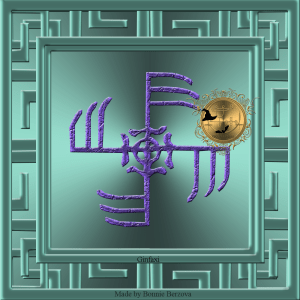
This is the sigil Ginfaxi and it can be used in protection spells.


Sixth knot — the return

By the sixth knot, let harm turn away,
Let hostile forces lose their way.
What is not meant for this one’s door,
Shall find its path here nevermore.

Seventh knot — the seal

By the seventh knot, the work is sealed,
Sevenfold guarded, sevenfold healed.
Bound by word and sign and will,
May this protection hold steadfast still.

The historical Icelandic material gives us the vocabulary and grammar of galdor-stave magick; combining those elements with a seven-knot spell in this particular way is best understood as modern magickal practice inspired by the tradition, rather than as a claim that this exact knot ritual was performed in medieval Iceland.

That distinction actually makes the practice more interesting: we are not merely copying an old symbol—we are learning its magickal grammar and using that grammar to create a new working.

The old stave becomes the seed.
The knot becomes the binding.
The poem becomes the voice.
And intention becomes the direction of the work.


Ginfaxi


Ginfaxi is a particularly interesting stave because its historical purpose is not primarily general protection. In the Icelandic magickal tradition, Ginfaxi is paired with Gapaldur in glímagaldur—magick connected with Icelandic wrestling.

Ginfaxi was placed under the toes of the left foot, while Gapaldur was placed beneath the heel of the right foot, with the pair intended to help the practitioner prevail in the struggle.

That gives Ginfaxi a powerful symbolic meaning for modern practice: strength in struggle, the ability to withstand pressure, and the power to overcome resistance.


Ginfaxi:

the power to stand and overcome


Ginfaxi can be understood as a stave for the moments when a person finds themselves in a struggle.

Its original context was physical combat, but Flowers also presents the Gapaldur–Ginfaxi working under the broader heading of “Winning Struggles of All Kinds,” extending the symbolism beyond wrestling to internal struggles and conflicts with others.

This makes Ginfaxi particularly suitable for situations where someone needs to:

  • remain strong when facing adversity;
  • stand their ground when under pressure;
  • overcome obstacles and resistance;
  • strengthen determination and perseverance;
  • maintain confidence during confrontation;
  • find the inner strength to continue when circumstances become difficult.

The important distinction is that Ginfaxi is not simply a “protection symbol. Its traditional association is more active. Protection creates a boundary around a person; Ginfaxi represents the power to meet resistance and prevail.

This also explains why it works so naturally with Gapaldur. The two staves create an almost beautifully physical magickal image: one gives stability and grounding, while the other contributes the force needed to overcome the struggle.

Historically, however, it is worth keeping the distinction clear: the surviving sources specifically connect Ginfaxi with victory in wrestling and with the paired Gapaldur–Ginfaxi working.

Extending it into a general-purpose spell for personal resilience or protection is a modern interpretation inspired by that traditional symbolism, rather than a documented medieval use.

And that distinction actually gives Ginfaxi a fascinating place alongside the Ægishjálmur: Ægishjálmur can represent the protective, awe-inspiring shield; Ginfaxi can represent the strength that allows the person behind that shield to stand their ground.


My blog

Here is my blog.
 

Jormungandr, the serpent of Midgaard and how he can help you


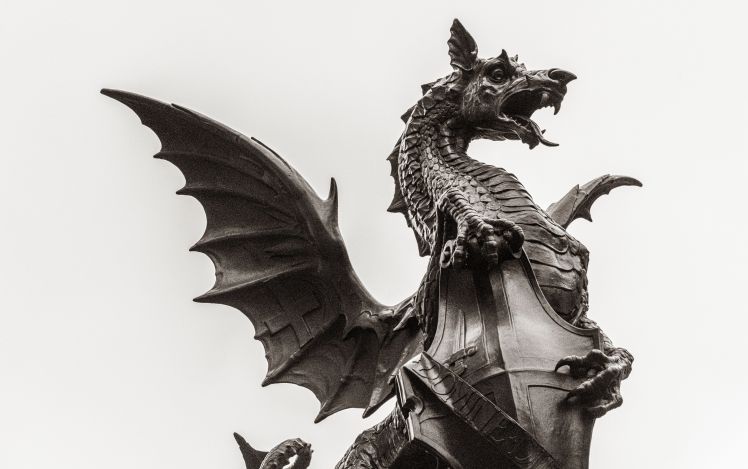
Jormungandr, the serpent of Midgard can fly in the air.


Jormungandr, the serpent of Midgard can fly in the air. The enormous dragon flew me from Stockholm to Iceland just in 30 minutes. We flew to Jormungandrs lake.

Now, I am resting inside Jormungandr and he is protecting me. This is a very handsome spirit: he is clever, educated and very polite. All these experiences are astral adventures.

Jormungandr can teach you Icelandic magick, because he himself practices magick. There are very few books on the topic of Icelandic magick, but Jormungandr will show you unique sources of information.

This spirit can even turn into a humanoid and he can retain his human form as long as he wants. Such a long time has passed sinse Jörmunandr was created, so this spirit has evolved a lot.

Jormungandr can protect you from the most vicious enemies. He can eat up your enemies in the astral, chase them away, create hell and chaos for them.

To please this spirit, please call him while you drum loudly. Jormungandr loves the sound of a shamanic drum.


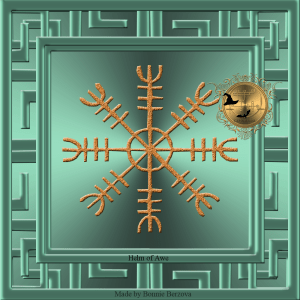
The sigil of Jormungandr.


The sigil above belongs to Jormungandr. As soon as you start gazing at this sigil, the serpent will appear in front of you. And if you become afraid, you can ask him to take on a human appearance.

This sigil of Jormungandr can be used in Witch bottles along with the sigils of Odinn, Freya and Loki. All four spirits are excellent protectors.

So far, there are three things the serpent of Midgard can do for you:

he can teach you Icelandic magick

he can protect you

he can do astral surgeries on you to help you (activate your pineal gland, etc.)

Jormungandr told me that I will live together with him on Iceland near his astral lake. He swims in the lake and eats fish. The astral Vikings from the past are alive in the astral and they sail on the lake and also harvest fish.

I will also live in the astral Stockholm, because I have close ties to the astral Vikings from Bredäng, Birka and Upsala.


My blog

Here is my blog.
 

The Icelandic god Njordr and how he can help you


This is the Icelandic god Njordr (17th century Icelandic illustration). Source: Wikipedia.


The Icelandic god Njordr is very friendly. I have been to the past and I have lived among the Swedish Vikings in another dimension during 15 years.

The Swedish Vikings from Valhalla know me very well. I have even been to war with the Vikings and learned a lot in their dimension: how to take care of scared horses and how to care for wounded men.

The Vikings taught me the art of war: I made arrows dipped in poisons and I even shot burning arrows at the enemies of the Vikings. I met Spartacus in ancient Rome too, because I was stolen from the Vikings by the Roman soldiers.

Njordr appears at once as soon as you summon this spirit. He starts a conversation: this spirit could see that the Vikings in Valhalla knew me very well.

If you want to expand your business, get a job or simply want to have an idea regarding your money making ability, Njordr can help you.

Sit comfortably in a armchair and stare at the portrait of Njordr and this spirit will appear. I see spirits and even hear spirits so holding conversations with Oden and Njordr is very entertaining to me.

Tell Njordr about your desires if you want to start a business. This spirit will help you. All you need to do is this: stare at his portrait 2 times every week and talk to him.


My blog

Here is my blog.