Njörðr is the Icelandic god of successful trade and prosperity. The strongest historical foundation for this post is actually quite good: Gylfaginning explicitly says that Njörðr was invoked by seafarers and fishermen, and describes him as wealthy enough to grant land and possessions.
Ynglinga saga connects his rule with peace, good seasons, and prosperity, and says that sacrifices continued under him.
What we cannot establish from the surviving sources is a detailed fishing spell, a particular food that was specifically “Njörðr’s favourite,” or a historical ritual in which Odin and Njörðr were summoned together for commercial prosperity.
I’ve therefore written those parts as as modern reconstruction inspired by the sources, rather than presenting them as documented Viking ritual.
Among the gods of the North, Njörðr has always fascinated me because his power is wonderfully practical. He is not only a god of the sea.
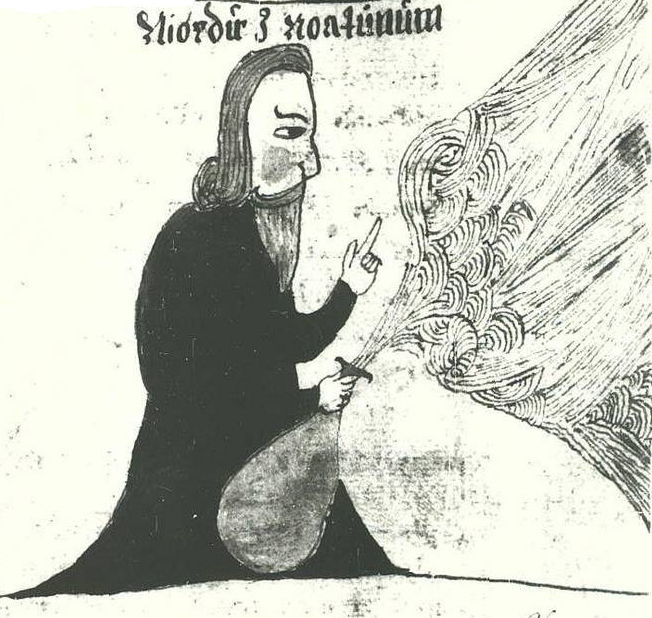
He is a god of favourable winds, successful voyages, fishing, wealth, abundance and prosperity. Maybe it is possible to store winds in knots of a cord by invoking Njordr.
In Gylfaginning, Njörðr is described as ruling the winds, calming the sea and fire, and being invoked by seafarers and fishermen. He is also described as extraordinarily wealthy and capable of granting people land and possessions.
This is one of the clearest pieces of evidence we have for approaching Njörðr in magickal work. The old sources are telling us directly:
If you travel upon the sea, call on Njörðr.
If you fish, call on Njörðr.
If you seek prosperity and abundance, call on Njörðr.
Njörðr and the bounty of the sea
For a Viking fisherman, the sea was not an abstract symbol. It was livelihood. A successful voyage could mean food for the family, goods to trade and wealth for the community.
A poor catch could mean hardship. A dangerous sea could mean death. So the idea of a divine power who could calm the waters, influence the winds and bring prosperity would have been enormously important.
We should be careful, however, about saying that Vikings used a particular surviving “Njörðr fishing spell.” No such detailed spell survives.
What we do have is the testimony of the Prose Edda that fishermen and seafarers called upon Njörðr, combined with Ynglinga saga, where Njörðr’s reign is associated with peace, good seasons and prosperity.
That gives the modern witch a very strong foundation.
Njörðr of Nóatún
Njörðr dwells at Nóatún, the “enclosure of ships” or “ship-place,” and his identity is deeply connected with the coast and the sea.
He is a Vanir god, associated with fertility, prosperity and the forces that make life materially abundant. His relationship with Skaði is also revealing.
She longs for the mountains and the hunting grounds. Njörðr longs for the sea.
The Prose Edda describes how the two tried to divide their time between the mountains and Nóatún, but neither was truly comfortable in the other’s landscape. Njörðr misses the sound of the sea and seabirds when he is in the mountains.
This makes Njörðr feel profoundly coastal. He belongs beside the harbour. Beside the fishing boat. Beside the nets. Beside the merchant ship waiting for a favourable wind.
Calling Njörðr with Óðinn
I like the idea of approaching Njörðr together with Óðinn, but I would describe this as a modern magickal working, not as a documented historical ritual.
The two make an interesting pair. Njörðr brings favourable conditions, abundance and prosperity. Óðinn brings wisdom, knowledge, strategy and the ability to recognize opportunity.
One might ask Njörðr for the favourable wind. One might ask Óðinn to know when to sail. One might ask Njörðr for a prosperous journey.
One might ask Óðinn for the wisdom to make good decisions along the way.
The ritual can begin with the sound of a drum. Let the rhythm become the movement of waves. Slowly imagine the shoreline. Hear the water. Imagine a harbour filled with ships.
Then call:
Njörðr of Nóatún,
Lord of wind and sea,
Friend of the fisherman and voyager,
I call to you with respect.
Calm the waters before me.
Bring favourable winds to my journey.
Let the sea yield its bounty,
and let honest work bear abundant fruit.
Then call Óðinn:
Óðinn, Wanderer and seeker of wisdom,
stand beside me.
Give me the sight to recognize opportunity,
the wisdom to choose wisely,
and the courage to act when the favourable wind arrives.
What can be offered to Njörðr?
The surviving sources do not give us a specific menu of “Njörðr’s favourite foods.” So I would not claim that a particular modern offering is historically certain.
Instead, I would choose food that reflects his character. For a modern ritual, suitable offerings might include:
fresh bread, grains, fish, apples, berries, honey, butter, salt, water, or a drink such as ale, beer or mead.
Fish is particularly symbolically appropriate because the Prose Edda explicitly associates Njörðr with fishermen. A meal can also become part of the offering.
Place a portion aside for Njörðr before eating.
You might say:
Njörðr, Lord of Nóatún,
I give this food in gratitude.
May there be food upon my table,
work for my hands,
favourable winds upon my journey,
and prosperity gained honourably.
The Njörðr prosperity magick
For modern witches, I think Njörðr is particularly appropriate for prosperity that comes through movement and exchange. Not simply “give me money.”
Instead:
bring me opportunities.
Bring me customers.
Bring me good contracts.
Bring me successful journeys.
Bring me profitable exchanges.
Bring me the right people at the right time.
This fits the maritime and trading symbolism beautifully. A witch who runs a business might place a small bowl of water on the altar together with a coin, a piece of bread and a small representation of a ship.
The water represents the sea. The coin represents wealth. The bread represents abundance. The ship represents movement and trade
Meditate on the portrait of Njordr during your ritual. Look at the portrait of Njordr during 20 minutes and speak about your difficulties to increase your income.
Then speak:
As ships cross the waters,
may opportunity cross my path.
As the tide returns,
may prosperity return to me.
As the harbour receives ships,
may my work receive customers and good fortune.
Let honest exchange bring abundance.
Let what I give return multiplied in blessing.
Fishing magick
There are special sigils for fishermen in the “Galdrabok” and in “Icelandic magic” by Stephen Flowers.
For someone who actually fishes, the symbolism becomes even more direct. Summon Odinn and Njordr first. Then before going to the water, the witch could hold the sigil and a fishing line, hook or net and speak:
Njörðr, master of favourable waters,
guide my journey.
Let the wind be kind,
let the waters be generous,
let me take only what I need,
and let me return safely home.
The sigil must be charged inside the ritual circle by directing the raised magickal energy into the sigil, the fishing line, hook or net. The sigil should be placed inside the boat or inside the pocket.
Knot magic for prosperity
Njörðr is also wonderfully suited for knot magick. Take a cord in a colour that represents prosperity to you. Place a small symbol of the sea or a the portrait of Njörðr and the fishing sigil beside it.
Then tie seven knots. With each knot, name something that contributes to prosperity:
First knot — opportunity.
Second knot — good fortune.
Third knot — wise decisions.
Fourth knot — successful exchange.
Fifth knot — steady income.
Sixth knot — abundance shared wisely.
Seventh knot — prosperity sustained.
At the final knot:
As the tide returns to the shore,
may prosperity return to me.
As the wind fills the sail,
may opportunity fill my life.
Njörðr, Lord of abundance,
guide the winds of my fortune.
Óðinn, Lord of wisdom,
teach me where to steer.
May my work prosper,
may my household flourish,
and may my abundance be used well.
Thank Njordr and Odinn for their help, say good bye to the gods, and close the ritual circle.
My blog
Here is my blog.

